RESEARCH
GLP-1
GLP-1s Are Changing American Taste Buds. Sweetness Is Taking the Biggest Hit.
For much of the conversation around GLP-1s, there’s been an assumption that food simply becomes less appealing. Flavour fades, cravings disappear and appetite drops because nothing tastes quite as good anymore.
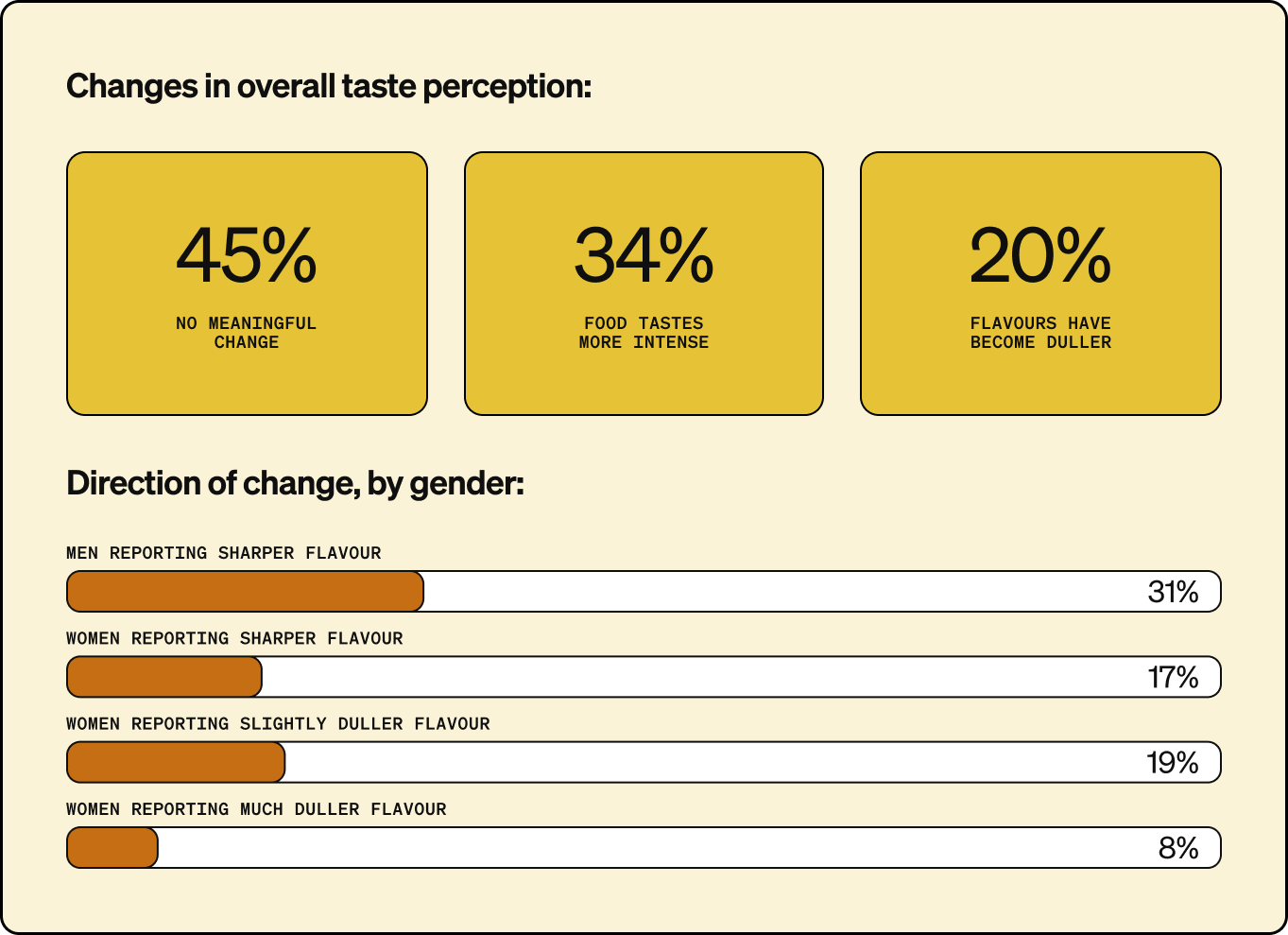
New research from Ideally suggests something different. In a dedicated study of 207 current and former American GLP-1 users, 34% say food tastes more intense since starting treatment, compared with 20% who say it has become duller. Another 45% notice no change at all.
And sweetness is where the shift becomes particularly pronounced. A third of users say sweet foods now taste stronger, rising to 55% among 25-to-34-year-olds.
For food and beverage brands, changing appetites may only be part of the GLP-1 story. Changing palates could influence everything from sweetness and seasoning to portion size and product development.
This report breaks down what that means for the category.
New research from Ideally suggests something different. In a dedicated study of 207 current and former American GLP-1 users, 34% say food tastes more intense since starting treatment, compared with 20% who say it has become duller. Another 45% notice no change at all.
And sweetness is where the shift becomes particularly pronounced. A third of users say sweet foods now taste stronger, rising to 55% among 25-to-34-year-olds.
For food and beverage brands, changing appetites may only be part of the GLP-1 story. Changing palates could influence everything from sweetness and seasoning to portion size and product development.
This report breaks down what that means for the category.
INSIDE THE REPORT
- Taste is intensifying for many GLP-1 users: 34% report stronger flavours since starting treatment, compared with 20% who experience a duller palate.
- Men and women are experiencing the shift differently: 42% of men report heightened taste intensity compared with 26% of women, while women are more likely to report taste becoming duller.
- Younger users are especially receptive: 70% of 25-to-34-year-olds say reformulation would improve their opinion of a brand, compared with roughly a quarter of those aged 65 and older.
- Sweetness is changing faster than salt: A third of users say sweet foods now taste stronger, rising to 55% among 25-to-34-year-olds. Salt remains relatively stable, with 53% noticing no change.
- Consumers are giving brands permission to adapt: 48% of users say they’d view a brand more positively for adjusting sweetness, seasoning or portion size to suit changing palates, compared with just 9% who’d see it negatively.
ABOUT THIS RESEARCH
Ideally fielded this Taste Change study to 1,095 US adults on 17 July 2026, a dedicated module separate from the main 2,184-person GLP-1 footprint study. Findings in this chapter are drawn from the 207 current and former GLP-1 users within that sample.